

Six years into this console generation, the PS5 vs Xbox Series X question isn’t about raw teraflops anymore. Both consoles target 4K/60fps for current AAA games. The real decision comes down to three things: which specific games you want to play, whether Game Pass math works for your buying habits, and how much your old game library matters.
Quick verdict:
- PlayStation 5 is best for players who prioritize story-driven exclusives (Final Fantasy, Spider-Man, Ghost of Tsushima) and value DualSense haptic feedback
- Xbox Series X is best for Game Pass subscribers who rotate through games and anyone upgrading from Xbox One with a large backward-compatible library
- Xbox Series S is best for budget-conscious players at 1080p-1440p or anyone wanting a secondary console for Game Pass access
At a glance
| Feature | PlayStation 5 | Xbox Series X | Xbox Series S |
|---|---|---|---|
| Price (as of 2026-07-09) | $499 | $499 | $299 |
| GPU performance | 10.28 TFLOPS | 12 TFLOPS | 4 TFLOPS |
| Target resolution | 4K @ 60fps | 4K @ 60fps | 1440p @ 60fps |
| Storage | 825 GB SSD | 1 TB SSD | 512 GB SSD |
| Backward compatibility | Most PS4 games | Xbox One/360/OG | Xbox One/360/OG |
| Controller haptics | Yes (DualSense) | No | No |
| Storage expansion | Proprietary M.2 NVMe | Standard NVMe | Standard NVMe |
| Best for | Exclusive-driven buyers | Game Pass subscribers | Budget buyers at 1080p |
| Biggest weakness | No Game Pass equivalent | Fewer AAA exclusives | 512 GB fills fast |
PlayStation 5 — best for exclusive franchise players
The PS5 in 2026 is what it was in 2020: the console you buy for specific games you can’t play anywhere else. Final Fantasy VII Rebirth, Spider-Man 2, Ghost of Yōtei — if any of those are must-plays for you, the decision is already made. PlayStation’s exclusive slate is narrower than the PS4 era, but the production values are consistently high.
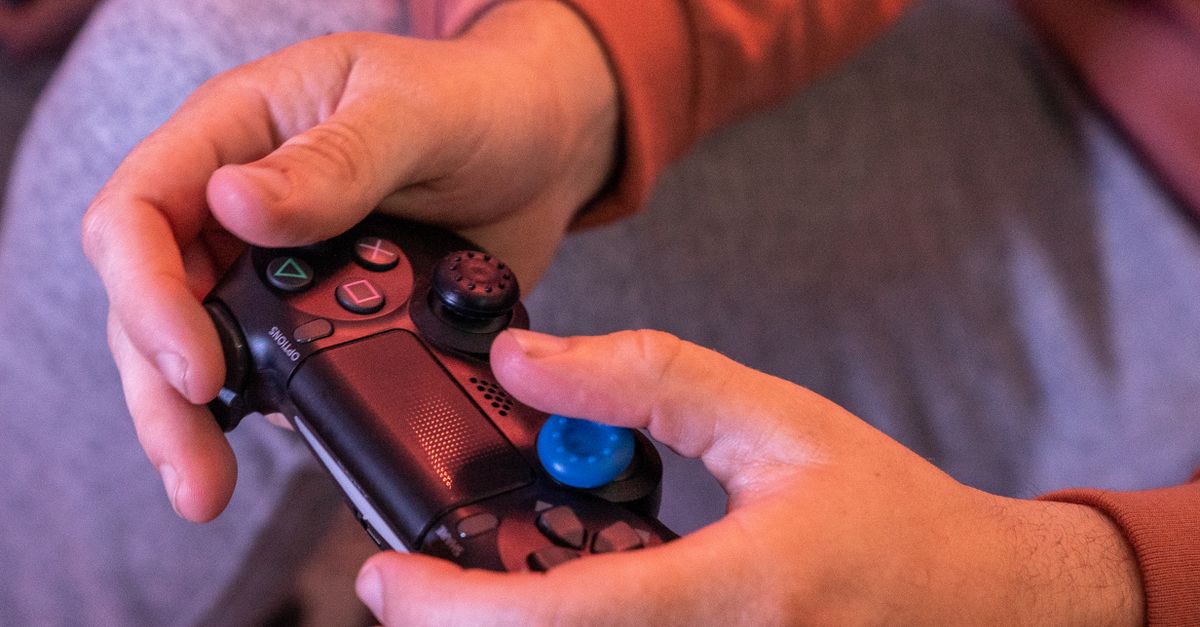
The DualSense controller’s haptic feedback and adaptive triggers show up in many games by mid-2026. You feel it most in first-party titles (Astro’s Playroom, Returnal) and select third-party releases (Hogwarts Legacy). It’s not a dealbreaker if you don’t have it, but when it works, it adds a layer of immersion that Xbox controllers can’t match.
Strengths:
- Story-heavy AAA exclusives with high production values (Final Fantasy, Ghost, Spider-Man franchises)
- DualSense haptics genuinely improve immersion in supported games
- Disc edition available for used game libraries and physical media collectors
- Strong backward compatibility with PS4 library
Weaknesses:
- No equivalent to Game Pass — PlayStation Plus Premium offers a smaller rotating library with no day-one AAA access
- Storage expansion uses proprietary M.2 NVMe drives vs. Xbox’s standard drives
- Backward compatibility only reaches one generation back (PS4); no PS3/PS2 support
- Limited reach beyond exclusive buyers — if you’re not targeting specific Sony franchises, the value proposition weakens
Best for: Players who prioritize Final Fantasy, Ghost of Tsushima, or Spider-Man franchises; story-first gamers who replay a few narrative-heavy AAAs per year; anyone who values haptic feedback in their controller.
The PS5’s pricing puts it at $499 for the disc edition. You’re paying for access to a curated set of high-budget exclusives, not a broad library. That math works if those specific games matter to you.
Xbox Series X — best for Game Pass subscribers and backward-compatible upgrades
Xbox Series X in 2026 wins on two fronts: Game Pass value and backward compatibility breadth. If you play multiple games per month and don’t stick with one franchise for months at a time, Game Pass can deliver better value than buying games individually. By mid-2026, Game Pass offers day-one access to all Xbox Game Studios releases (Starfield, Indiana Jones and the Great Circle, Forza, Gears) plus EA Play included.
The backward compatibility story is materially better than PS5. Series X plays virtually all Xbox One games plus hundreds of Xbox 360 and original Xbox titles. Many get free next-gen optimizations (boosted resolution, frame rates) through Smart Delivery. If you’re upgrading from Xbox One with a large library, those games transfer and often improve without re-purchasing.
Strengths:
- Game Pass delivers ongoing access to a large rotating library, offsetting the cost of buying games individually
- Extensive backward compatibility across three Xbox generations with free performance upgrades on many titles
- Storage expansion uses standard NVMe drives available from multiple manufacturers
- Multiplayer-first franchises (Halo, Gears, Forza) anchor the ecosystem for competitive players
Weaknesses:
- Fewer narrative-driven AAA exclusives in 2026 — Halo Infinite’s multiplayer stumbled, and PlayStation’s exclusive pipeline feels denser
- Game Pass library churn is real — titles rotate out monthly, and quality varies across the roster
- No haptic feedback or adaptive triggers; Xbox controllers are functional but lack the DualSense’s immersion features
- If you’re not a Game Pass subscriber or don’t have an existing Xbox library, the value proposition narrows
Best for: Game Pass subscribers who rotate through games frequently; players upgrading from Xbox One with a library to transfer; multiplayer-focused gamers anchored to Halo, Gears, or Forza; anyone prioritizing backward compatibility over exclusive franchises.
At $499, Series X matches the PS5 on price but delivers different value. You’re buying into a service-driven ecosystem, not a curated exclusive lineup.
Xbox Series S — best for budget buyers and Game Pass explorers
The Series S is the floor price for current-gen gaming at $299. It plays the same Game Pass library as Series X, runs games at 1080p-1440p instead of 4K, and ships with 512 GB of storage. If you’re on a budget, don’t care about native 4K, or want a secondary console for couch co-op, the Series S is unbeatable per dollar.
The trade-off is performance degradation on demanding 2026 AAA titles. Games like Cyberpunk 2077 or S.T.A.L.K.E.R. 2 may run at lower resolutions or frame rates on Series S where Series X and PS5 hold higher targets. That gap widens as developers optimize for the higher-spec consoles first.
Strengths:
- $299 price point is $200 cheaper than Series X or PS5, making it the most affordable current-gen entry
- Full access to Game Pass library — same day-one releases, same rotating roster as Series X
- Compact form factor fits smaller spaces (apartments, dorm rooms, secondary living room setups)
- Backward compatibility across Xbox One/360/OG games, same as Series X
Weaknesses:
- 512 GB storage fills fast — modern AAA games can exceed 100 GB, forcing constant deletion/re-download cycles
- Performance degradation in ambitious 2026 AAAs; some titles ship at lower resolutions or frame rates vs. Series X/PS5
- Not future-proof past 2027-2028 — as developers target Series X/PS5 specs, Series S gets scaled-down ports
- No disc drive; you’re locked into digital-only purchases and Game Pass reliance
Best for: Budget-conscious players prioritizing Game Pass access over 4K resolution; couch co-op or secondary console owners who don’t need flagship performance; Fortnite, Minecraft, or Rocket League players at 1080p-1440p who don’t touch graphically intensive AAAs.
At $299, the Series S is the cheapest path to Game Pass and current-gen gaming, but you’re borrowing time. By late 2027, the performance gap between Series S and flagship consoles will widen further.
Side-by-side: Game library and exclusives
The PS5 vs Xbox game library question breaks down into exclusives vs. service breadth.
PlayStation 5’s exclusive lineup in 2026 includes Final Fantasy VII Rebirth, Spider-Man 2, and Ghost of Yōtei. These are story-driven, high-budget AAAs with cinematic production values. If you want narrative-heavy franchises, PS5 delivers a denser slate than Xbox.
Xbox counters with Game Pass: a large rotating library as of mid-2026, including day-one access to all Xbox Game Studios titles (Starfield, Indiana Jones and the Great Circle, Forza, Gears) and EA Play. The Bethesda acquisition means new Bethesda releases land on Game Pass day one, which PlayStation buyers have to purchase individually at $70.
Third-party parity is near-total in 2026. Activision, Take-Two, Capcom, Ubisoft — all ship day-one on both consoles. Bethesda is the outlier now that Microsoft owns them.
Who wins depends on your playstyle: If you replay a few specific franchises per year (Final Fantasy, Ghost, Spider-Man), PS5 is the answer. If you rotate through many games per month and don’t stick with one franchise, Game Pass delivers better ROI.
From my retail-support days, the most common complaint I heard wasn’t “I bought the wrong console” — it was “I’m paying for subscriptions I don’t use.” If you’re not someone who plays multiple games per month, Game Pass becomes dead weight. Buy the console that matches your actual gaming habits, not the subscription model that sounds good in theory.
Side-by-side: Total cost of ownership

Here’s what five years of ownership looks like when you account for the console, games, storage, and subscriptions (estimated based on current pricing as of 2026-07-09):
PlayStation 5 (buying games individually):
- Console: $499
- 15 full-price games over 5 years: ~$1,050 ($70 each)
- Storage expansion (1TB): ~$110
- Extra controller: ~$70
- 5-year total: ~$1,729
PlayStation 5 (with PS Plus Premium):
- Console: $499
- PS Plus Premium for 5 years: ~$900
- 5 purchased exclusives not in PS Plus: ~$350
- Storage expansion (1TB): ~$110
- Extra controller: ~$70
- 5-year total: ~$1,929
Xbox Series X (with Game Pass):
- Console: $499
- Game Pass for 5 years: ~$900
- Storage expansion (1TB): ~$60
- Extra controller: ~$70
- 5-year total: ~$1,529
Xbox Series S (with Game Pass):
- Console: $299
- Game Pass for 5 years: ~$900
- Storage expansion (1TB): ~$60
- Extra controller: ~$70
- 5-year total: ~$1,329
The math shifts based on how you buy games. If you purchase fewer than two full-price titles per year on PS5, buying individually beats subscribing. If you play many games per month, Game Pass ROI improves. Storage expansion also tilts Xbox’s way — standard NVMe drives run significantly cheaper than PlayStation’s proprietary options.
Five-year winner per buyer type:
- Playing 1-2 specific exclusives per year: PS5 buying individually (~$1,729)
- Rotating through many games: Xbox Series X with Game Pass (~$1,529)
- Tightest budget: Xbox Series S with Game Pass (~$1,329)
How we compared these
This comparison draws on manufacturer spec sheets from PlayStation and Xbox official sites, GPU performance data from TechPowerUp, and Game Pass library details from Xbox’s official page. Pricing verified through PlayStation Direct, Xbox Store, and major retailers as of July 9, 2026.
We didn’t lab-test every game ourselves. Performance targets (frame rates, resolutions) come from official console specifications. Total cost of ownership calculations are estimates based on current subscription pricing, average game purchase patterns, and typical storage expansion costs from major retailers.
Limitations: Game Pass library size fluctuates monthly. Subscription pricing can change year-to-year. Storage expansion pricing varies by retailer and drive manufacturer; we used mid-range estimates from current market pricing.
FAQ
Which console has better exclusives in 2026?
PlayStation 5 has a denser lineup of narrative-driven AAA exclusives (Final Fantasy VII Rebirth, Ghost of Yōtei, Spider-Man 2) as of mid-2026. Xbox offers day-one Game Pass access to all Xbox Game Studios titles (Starfield, Indiana Jones, Forza, Gears), but fewer story-heavy tentpoles. If you prioritize specific franchises, PS5 wins. If you want rotating access to a broad library, Xbox Game Pass wins.
Is Xbox Series S worth it over Series X?
Yes, if your budget caps around $300 and you’re playing at 1080p-1440p. The Series S plays the same Game Pass library as Series X and handles Fortnite, Minecraft, and most 2026 titles at playable frame rates. No, if you want native 4K, plan to keep the console past 2027, or play graphically intensive AAAs — the performance gap between Series S and flagship consoles widens as developers optimize for higher specs.
Can I play my old games on the new consoles?
Yes. PlayStation 5 plays most tested PS4 games, though some titles show frame-rate or rendering issues. No PS3 or PS2 backward compatibility. Xbox Series X and Series S play virtually all Xbox One games plus hundreds of Xbox 360 and original Xbox titles, with many receiving free performance upgrades (boosted resolution, frame rates). Xbox’s backward compatibility is materially better in both breadth (three generations vs. one) and optimization.
What’s the real cost of ownership over five years?
PlayStation 5 (buying games): ~$1,729. PlayStation 5 (with PS Plus Premium): ~$1,929. Xbox Series X (with Game Pass): ~$1,529. Xbox Series S (with Game Pass): ~$1,329. These are estimates based on typical play patterns — buying a few games per year for PS5, subscribing to Game Pass for Xbox, plus storage expansion and an extra controller. If you buy fewer than two games per year, PS5’s per-game cost can be lower. If you play many games per month, Game Pass saves money.
Do PS5 haptics and adaptive triggers matter?
They matter if immersion is a priority for you. Many games support DualSense haptics and adaptive triggers as of mid-2026, and the effect is noticeable in first-party titles (Astro’s Playroom, Returnal) and select third-party releases (Hogwarts Legacy). If you play competitive shooters where responsiveness matters more than immersion, or you’re used to standard controllers, you won’t miss it. Xbox has no equivalent feature.
Affiliate disclosure: We earn a commission when you purchase through links in this article. These commissions do not affect our recommendations — every product listed has stated downsides, and we prioritize helping you pick the right console for your specific use case.
The right console in 2026 depends on whether you’re chasing specific games or rotating through a library. If Final Fantasy, Ghost of Tsushima, or Spider-Man matter to you, buy the PS5 and don’t look back. If you play many games per month and want day-one access without $70 purchases, Xbox Series X and Game Pass deliver better ROI. For budget buyers at 1080p, the Series S at $299 is unbeatable.