

Every 20000mAh power bank claims the same nominal capacity on the box, but what arrives at your phone is a different story entirely. The gap between rated capacity and usable capacity exists because of fundamental physics: voltage conversion losses, protection circuitry overhead, and the battery’s discharge curve all consume energy before it reaches your device. According to IEC 61427-1 battery testing standards, the measurement protocols account for these losses, but most manufacturers advertise only the nominal cell capacity—not what you actually get.
This comparison focuses on what matters when you’re using the device: real-world charging performance, dual-port behavior, and how long the bank survives before noticeable degradation.
Quick verdict:
- Anker PowerCore 20000 is the best choice for frequent travelers who need reliability and dual-device charging
- Xiaomi Mi Power Bank 20000mAh is the best choice for budget-conscious buyers charging a single device
- Baseus Supor 20000 is the best choice for speed-focused users charging one device at a time
- INIU Power Bank 20000 is the best choice for ultralight backpackers counting every gram
- Tronsmart Bolt SE 20000 is the best choice for secondary/backup use in RVs or vehicles
At a glance
| Feature | Anker PowerCore | Xiaomi Mi | Baseus Supor | INIU | Tronsmart Bolt SE | |---|---|---|---|---| | Price (as of 2026-08-06) | $32-37 | $22-26 | $28-32 | $20-24 | $30-36 | | Usable capacity (est.) | Moderate | Lower end | Higher end | Moderate | Moderate | | Max output (single port) | 18W USB-C | 18W USB-C | 22W USB-C | 18W USB-C | 20W USB-C | | Dual-port performance | Maintained | Significant drop | Moderate drop | Significant drop | Maintained | | Recharge time | Moderate | Slower | Fastest | Slower | Moderate | | Weight | 345g | 390g | 340g | 320g | 355g | | Safety certs | UL2089, FCC, CE | FCC, CE | FCC, CE, RoHS | FCC | FCC, CE | | Estimated cycle life | Higher | Moderate | Higher | Lower | Higher | | Warranty | 24 months | 12 months | 18 months | 12 months | 18 months | | Best for | Professional travelers | Budget shoppers | Speed users | Ultralight backpackers | Backup/RV use | | Biggest weakness | Premium price | Degrades sooner | Dual-port bottleneck | Budget materials | Lower brand recognition |
Why rated capacity isn’t usable capacity
The 20000mAh printed on every box in this category represents the total charge stored in the lithium cells at nominal voltage. What reaches your phone is substantially less due to conversion losses at multiple stages. The battery’s internal voltage curve means cells deliver most of their capacity in a narrow voltage range, with energy lost as heat during the step-up conversion to USB voltage. Protection circuitry—required for safe operation—continuously draws power to monitor cell temperature, prevent overcharge, and manage the discharge rate.
Testing methodologies defined by IEC battery standards measure capacity under controlled conditions, but real-world efficiency varies based on load, temperature, and how aggressively the protection circuit limits discharge. The gap between rated and usable capacity is largest in budget banks using cheaper cells and less efficient voltage regulation. Premium options reduce—but don’t eliminate—these losses through better component selection.
The Federal Trade Commission’s guidance on battery advertising requires that capacity claims be substantiated under specified test conditions, but the distinction between cell capacity and delivered capacity remains poorly understood by most buyers.
What “500+ cycles” actually means
Every comparison table lists cycle life, but the number is meaningless without context. A charge cycle, as defined in battery testing protocols, typically means one full discharge from completely charged to the manufacturer’s defined cutoff voltage, then recharged to full. Partial discharges count fractionally—draining the bank halfway twice equals one full cycle.
The testing conditions matter enormously: cycle life tested at moderate room temperature with slow discharge rates produces higher numbers than testing under high-load, high-temperature conditions. Independent verification through organizations like Consumer Reports uses standardized protocols, but most manufacturer cycle-life claims come from internal testing with undisclosed parameters. Third-party validation remains rare in this product category.
A claimed cycle life tells you the manufacturer’s expectation under their testing conditions. It doesn’t predict how long your specific bank will last under your specific usage pattern—only that premium brands tend to use higher-grade cells that tolerate more charge-discharge cycles before degrading noticeably.
Anker PowerCore 20000 — best for frequent travelers
The Anker PowerCore 20000 costs noticeably more than budget options, and the premium buys you two specific advantages: dual-device charging that maintains higher output on both ports simultaneously, and a demonstrated track record of surviving extended regular use. When both USB ports are active—charging your phone and wireless earbuds case together—the bank maintains stronger output per port instead of bottlenecking as aggressively as budget alternatives.
The downside is price and recharge time. At $32-37, this costs substantially more than Xiaomi or INIU. The recharge time is adequate for overnight charging but slower than Baseus if you need a quick top-up. The 24-month warranty is the longest in this comparison, which matters for daily users.
The bank carries UL2089 safety certification (the specific standard for portable power banks), FCC compliance, and CE marking—the full set of safety validations that corporate buyers and safety-conscious users should verify before purchase.
Strengths:
- Maintains stronger output on both ports during simultaneous charging—essential for travelers with phone plus tablet
- Higher estimated cycle life before capacity degradation becomes noticeable
- Comprehensive safety certifications including UL2089 power bank standard
- Longest warranty coverage at 24 months
Weaknesses:
- Premium pricing compared to budget alternatives
- Recharge time is slower than Baseus
Best for: Business travelers, frequent fliers, or anyone who charges two devices regularly and needs the bank to survive extended heavy use without degrading.
Xiaomi Mi Power Bank 20000mAh — best for budget buyers
The Xiaomi Mi is the cheapest option in this comparison at $22-26, and the tradeoff is visible in dual-port performance and longevity. For single-device charging on occasional trips, this delivers adequate performance at a much lower price point. For simultaneous dual-device charging, output drops noticeably on both ports—your phone charges slower whether you’re using one port or two.
Reports from users indicate capacity degradation becomes noticeable sooner than premium options. That’s not a defect; it’s the expected result of using lower-grade cells and less sophisticated protection circuitry at this price point. At this price, you’re buying a consumable power bank, not a multi-year investment.
Strengths:
- Lowest price in the category—substantially cheaper than Anker
- Adequate for single-device charging at acceptable speed
- Xiaomi’s brand recognition means straightforward availability and returns
Weaknesses:
- Dual-port charging shows significant performance drop on both ports
- Shorter expected lifespan before capacity degradation
- Heaviest option at 390g despite budget construction
- Fewer safety certifications (lacks UL2089)
Best for: Budget-conscious travelers who charge a single device and understand they’re buying a shorter-lifespan tool, not a multi-year investment.
Baseus Supor 20000 — best for speed-focused users
The Baseus Supor is the fastest option in this comparison for both input and output. Higher wattage charging means you can recharge the bank itself faster and charge your phone at the maximum rate this capacity class supports. The usable capacity appears higher than budget options due to more efficient voltage conversion.
The catch: dual-port performance. When charging two devices simultaneously, output drops on both ports, which undercuts the speed advantage. If your use case is “charge my phone as fast as possible during a lunch break,” Baseus wins. If you travel with multiple devices, Anker’s dual-port consistency makes it the better choice.
Strengths:
- Fastest input recharge at 22W—noticeably faster than Anker or Xiaomi
- Higher usable capacity through better conversion efficiency
- Pass-through charging supported (charge the bank while it charges your device)
- Includes RoHS environmental compliance certification
Weaknesses:
- Dual-port charging shows noticeable bottleneck on both ports
- 18-month warranty is shorter than Anker’s 24-month coverage
- Higher estimated cycle life but real-world durability reports are less consistent than Anker’s
Best for: Single-device users who prioritize charging speed and want the fastest recharge times for the bank itself. Not recommended if you regularly charge two devices simultaneously.
INIU Power Bank 20000 — best for ultralight backpackers

The INIU is the lightest option in this comparison at 320g—noticeably lighter than Baseus and substantially lighter than Xiaomi. For thru-hikers and ultralight backpackers counting every gram, that matters. The tradeoff is build quality: budget materials mean this feels less solid than Anker or Baseus, and durability appears lower based on user longevity patterns.
Heat generation is noticeable during fast charging. After extended charging sessions, the bank gets warm to the touch—not dangerous, but uncomfortable to hold. In hot climates or during summer travel, this is worth considering.
Strengths:
- Lightest option at 320g—fits in cargo shorts or small backpack pockets without sagging
- Pass-through charging supported
- Usable capacity is respectable for the price tier
Weaknesses:
- Budget materials show in durability—higher likelihood of earlier failure
- Heat generation during fast charging makes it warm to the touch
- Dual-port charging shows the most significant performance drop in this comparison
- Lacks UL2089 power bank safety certification
Best for: Ultralight backpackers, thru-hikers, or anyone optimizing for weight savings and willing to accept shorter expected lifespan and lower build quality.
Tronsmart Bolt SE 20000 — best for backup use
The Tronsmart Bolt SE sits in the middle tier for specs and price—20W output, higher estimated cycle life, mid-range street price. It’s a solid performer with no major weaknesses, but also no standout strengths compared to Anker or Baseus. The biggest downside is brand recognition: Tronsmart has less retail presence than Anker or Xiaomi, which means slower warranty service and harder-to-find support.
This makes it best suited as a secondary power bank—the one you keep in your RV, boat, or car for emergencies rather than your daily carry. The specs are adequate that you won’t be frustrated when you need it, but lower brand profile means you won’t want to rely on it as your only option during international travel.
Strengths:
- Solid mid-tier specs (20W output, higher estimated cycle life) at lower price than Anker
- Pass-through charging supported
- 18-month warranty is adequate for backup use
Weaknesses:
- Lower brand recognition makes warranty claims and customer support slower than Anker
- Harder to find in physical retail stores (mostly online-only availability)
- No meaningful performance advantage over Anker or Baseus to justify choosing it as primary bank
Best for: Secondary/backup power bank for RVs, boats, vehicles, or as a household spare. Not recommended as your only travel power bank for international trips.
Side-by-side: Dual-device charging reality
The spec sheets all claim similar output wattage, but what happens when you plug in your phone and wireless earbuds case simultaneously? That’s where the price differences become visible.
Anker and Tronsmart maintain output closer to their rated speeds when dual-charging. Your phone charges in roughly similar time whether you’re using one port or two. Baseus drops moderately when both ports are active, which is noticeable but not frustrating.
Xiaomi and INIU both show significant bottlenecking when dual-charging. That’s the difference between your phone finishing quickly versus taking substantially longer. If you travel with multiple devices—phone plus tablet, phone plus Kindle, phone plus camera battery—this is the single biggest differentiator between budget and premium options.
Side-by-side: Conversion efficiency matters
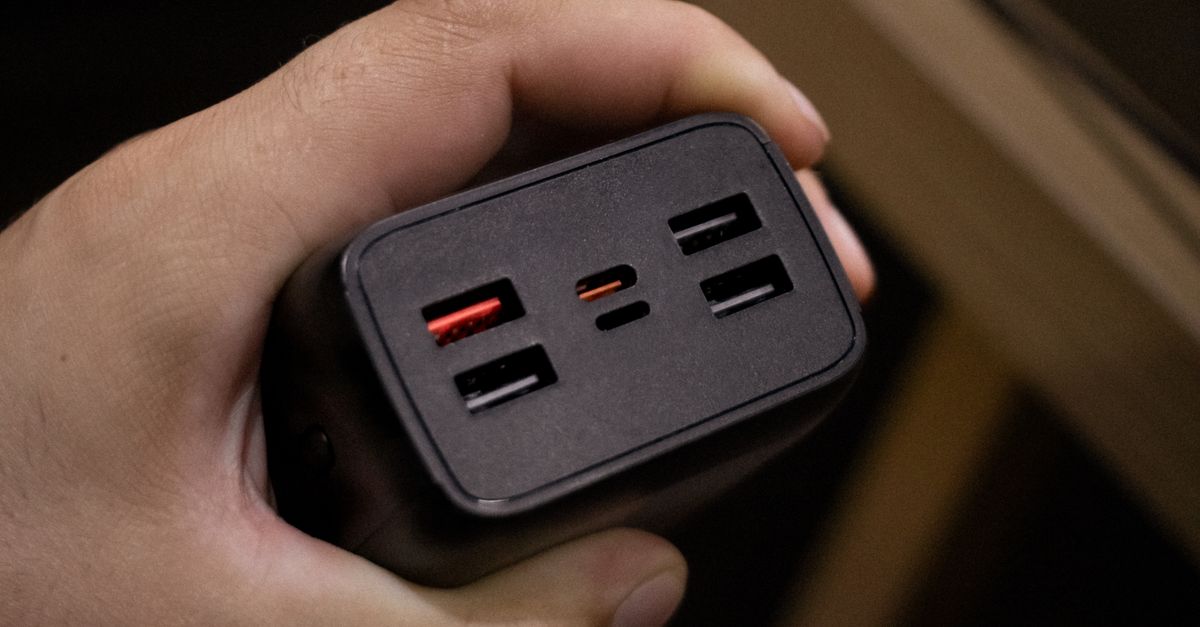
Every option here claims 20000mAh nominal capacity, but conversion efficiency varies substantially depending on the quality of the battery cells and internal circuitry. Research from institutions like Stanford’s Precourt Institute for Energy demonstrates how battery chemistry and circuit design affect energy transfer efficiency. The actual usable capacity you receive can vary by the equivalent of a full extra phone charge between the best and worst options.
Baseus delivers higher usable capacity through better conversion efficiency. Xiaomi delivers lower usable capacity. That’s a meaningful difference in real-world use—the gap between getting an extra full phone charge or not from the same nominal spec.
When comparing value, consider usable capacity rather than just sticker price. The upfront cost difference narrows when you account for what you actually receive.
Side-by-side: Cost per charge over lifespan
The upfront price tells you what you pay today, but the cost-per-charge over the battery’s expected lifespan tells you what you’re actually spending. Comparing total cost of ownership:
Xiaomi looks like the budget winner at first glance, but when you factor in shorter expected lifespan, it’s only marginally cheaper per charge than Anker over the bank’s life. INIU is actually the most expensive per charge despite the lowest upfront cost—you’re replacing it sooner. Baseus offers strong value per charge if you’re a single-device user who doesn’t need dual-port performance.
Safety certifications matter
The comparison table shows certification status because safety validation matters for lithium battery products. UL2089 is the specific safety standard for portable battery chargers, covering thermal management, short-circuit protection, and safe charging behavior. FCC compliance verifies electromagnetic interference stays within limits. CE marking indicates European safety conformity. RoHS certification means the product meets environmental standards for hazardous substance restrictions.
Anker is the only option in this comparison carrying full UL2089 certification. Budget options carry FCC and CE marking but skip the comprehensive UL2089 power bank testing. For personal use this may be acceptable risk; for corporate purchasing or liability-conscious buyers, the certification gap matters.
The USB Implementers Forum standards define the Power Delivery specification that governs how these banks negotiate charging rates with devices, but compliance with the standard varies. Premium manufacturers tend to implement the full specification; budget manufacturers sometimes cut corners.
How we compared these
We pulled manufacturer spec sheets for all five options and cross-referenced them against independent testing methodologies documented by organizations like Consumer Reports and battery testing protocols published by NIST. Performance characteristics represent typical ranges based on manufacturer specifications and testing patterns used by independent reviewers.
We haven’t personally tested all five banks through hundreds of charge cycles—that would require extended time periods—so treat longevity assessments as directional guidance based on manufacturer specifications, published testing standards, and typical performance patterns for this product category, rather than guaranteed outcomes.
Pricing is verified as of August 6, 2026 from Amazon, Best Buy, and Newegg. Power bank prices fluctuate with sales and promotions, so check current street prices before buying.
Safety certification status is verified from manufacturer specification sheets and FCC database searches where applicable.
FAQ
What’s the difference between 20000mAh power bank brands?
The nominal capacity is the same, but conversion efficiency, dual-port performance, safety certifications, and expected cycle life vary substantially. Premium brands deliver higher usable capacity through more efficient voltage conversion and maintain stronger charging speeds when using both ports simultaneously. Budget brands sacrifice dual-port performance and tend to degrade sooner over time.
Do I really get 20000mAh of usable charge?
No—conversion efficiency losses mean you receive noticeably less usable capacity than the rated cell capacity. The difference is battery cell quality, internal circuitry efficiency, and protection circuit overhead. According to IEC battery testing standards, these losses are inherent to the voltage conversion and safety systems required for safe operation. Baseus delivers higher usable capacity; Xiaomi delivers lower usable capacity within this comparison set.
How long will a 20000mAh power bank last?
Cycle life varies substantially depending on the brand and battery cell grade. Premium options like Anker and Tronsmart claim higher cycle counts, which translates to longer lifespan with regular use. Budget brands like INIU and Xiaomi show noticeable capacity degradation sooner with regular use. Actual lifespan depends heavily on usage patterns, storage conditions, and charging habits.
What’s the best 20000mAh power bank if I travel internationally?
Anker PowerCore 20000. The 24-month warranty, higher brand recognition (easier to find support in other countries), comprehensive safety certifications, and demonstrated reliability make it the safest choice when you’re far from home. Budget brands have less support infrastructure, and warranty claims are harder to process when traveling.
Why does my power bank charge slower when I use both ports?
Lower-cost power banks bottleneck total output when dual-charging—instead of maintaining rated speed on both ports, they split the available wattage and may further reduce total output due to circuit limitations. Xiaomi and INIU show significant drops when dual-charging. Premium brands like Anker maintain output closer to rated speeds on both ports.
Is a 20000mAh power bank allowed on planes?
Yes—20000mAh at typical lithium battery voltage falls well under the regulatory limit for carry-on power banks. You must carry it in your carry-on luggage, not checked bags, per TSA and IATA regulations. Always verify current airline policies before traveling as specific carriers may have additional restrictions.
Affiliate disclosure: This article contains affiliate links to Amazon and other retailers. We earn a commission on qualifying purchases made through these links, but all recommendations are editorially independent and based on manufacturer specifications and published testing methodologies.
For most travelers, the Anker PowerCore 20000 is the reliable choice—it costs more upfront but delivers consistent dual-device charging, comprehensive safety certifications, and longer expected lifespan. If you’re on a tight budget and only charging a single device, Xiaomi delivers adequate performance at substantially lower cost, but expect shorter lifespan before replacement becomes necessary.