

Most air fryer comparisons treat all models like they’re basically the same appliance with slightly different price tags. But after replacing three major appliances in my Minneapolis kitchen over six years, I’ve learned that the differences that matter aren’t always in the spec sheet — they’re in what happens at month 18 when the basket warps, or how much your electricity bill climbs when you’re running a high-wattage unit five nights a week.
Quick verdict:
- Ninja Foodi is the best choice for families of 4–5 who cook frequently and need reliable capacity without spending premium money
- Cosori Pro III is the best choice for home cooks who care about temperature consistency and want a solid 2-year warranty
- Instant Pot Vortex is the best choice for existing Instant Pot owners who want multi-function capability in one appliance
- Philips Airfryer Essential is the best choice for singles or couples in small spaces who prioritize quiet operation and compact footprint
- Breville Smart Oven Air is the best choice for families already planning to replace their toaster oven with a premium countertop appliance
At a glance
| Feature | Ninja Foodi | Cosori Pro III | Instant Pot Vortex Plus | Philips Essential | Breville Smart Oven Air | |---|---|---|---|---| | Price (as of Aug 7, 2026) | $90–$120 | $85–$110 | $110–$140 | $180–$220 | $400–$480 | | Basket Capacity | 8 qt | 5.8 qt | 6 qt | 2.6 qt | 4.5 qt (oven style) | | Preheat Time | Fast | Moderate | Moderate | Slower | Slowest | | Noise Level | Louder | Moderate | Moderate | Quieter | Quietest | | Best for | Families who cook frequently | Consistency-focused home cooks | Multi-function users | Small-space singles/couples | Premium oven replacement | | Biggest weakness | Temperature drift after extended use | Families of six or more need batching | Air-fry performance lags dedicated models | Tiny basket requires frequent batching | Massive footprint, slow preheat |
Ninja Foodi — best for families of 4–5 who cook frequently
The Ninja Foodi solves the problem I see most often with air fryers: you buy one, love it, then realize you’re cooking in two batches every single night because the basket’s too small. At 8 quarts, the Foodi handles a full sheet-pan quantity of fries or a whole rotisserie chicken without cramping. For a family of four or five, that’s everyone eating together instead of waiting for round two.
The speed is real — short preheat means frozen chicken nuggets are done quickly on a weeknight. Temperature consistency is adequate: it’ll drift somewhat mid-cycle, which doesn’t matter for fries or wings but can affect delicate fish or pastries. The dishwasher-safe basket is a weeknight savior.
Operating costs matter when you’re using an appliance this often. Air fryers generally draw between 1400 and 1800 watts — comparable to running a hair dryer for the duration of your cook time. Over a year of regular use, that adds up, though still substantially less than heating a full oven.
Strengths:
- Large 8-quart capacity eliminates batching for most families
- Fast preheat and cooking times make weeknight dinners realistic
- Dishwasher-safe basket cuts cleanup time
- Lower wattage models in the Foodi line can reduce operating costs compared to competitors
Weaknesses:
- Temperature accuracy drifts more than premium models during extended cooking
- Reliability reports show basket warping and heating-element issues emerging after a couple years of heavy use
- Customer support response is slower than Cosori or Breville
Best for: Families of 4–5 who cook several nights a week and need capacity without premium pricing. If you’re feeding six or more regularly, you’ll still batch occasionally, but less often than with smaller models.
Cosori Pro III — best for home cooks who care about consistency
When I’m reheating Thursday’s leftovers, I don’t want them to come out leather-dry because the temperature spiked unexpectedly. The Cosori Pro III’s standout feature is temperature stability — it holds tighter than anything else here except the Breville. That matters for reheating, for frozen dumplings that need to stay tender, and for anything delicate.
Consumer Reports consistently rates Cosori models well for temperature control in their kitchen appliance testing, and that precision shows up in real cooking. The 5.8-quart basket handles a family of four comfortably, five if you’re not cooking something bulky. Six or more people means you’re batching.
The 2-year warranty (extendable) is the longest in this comparison, and Cosori’s support reputation is notably better than Ninja’s — users report faster response times and actual solutions, not scripted troubleshooting loops.
Strengths:
- Tighter temperature stability delivers consistent results across reheating and delicate items
- 2-year warranty is longest here, with responsive customer support
- Reliability track record shows units lasting several years with minimal issues
Weaknesses:
- 5.8-quart capacity requires batching for families of six or more
- Fewer special features than competitors (no rotisserie, no dehydrate function)
- Mid-range pricing without the “premium feel” of Philips or Breville
Best for: Home cooks who air-fry or reheat regularly and want predictable results without temperature surprises. Budget-conscious but willing to pay for reliability that lasts past the first couple years.
Instant Pot Vortex — best for existing Instant Pot owners
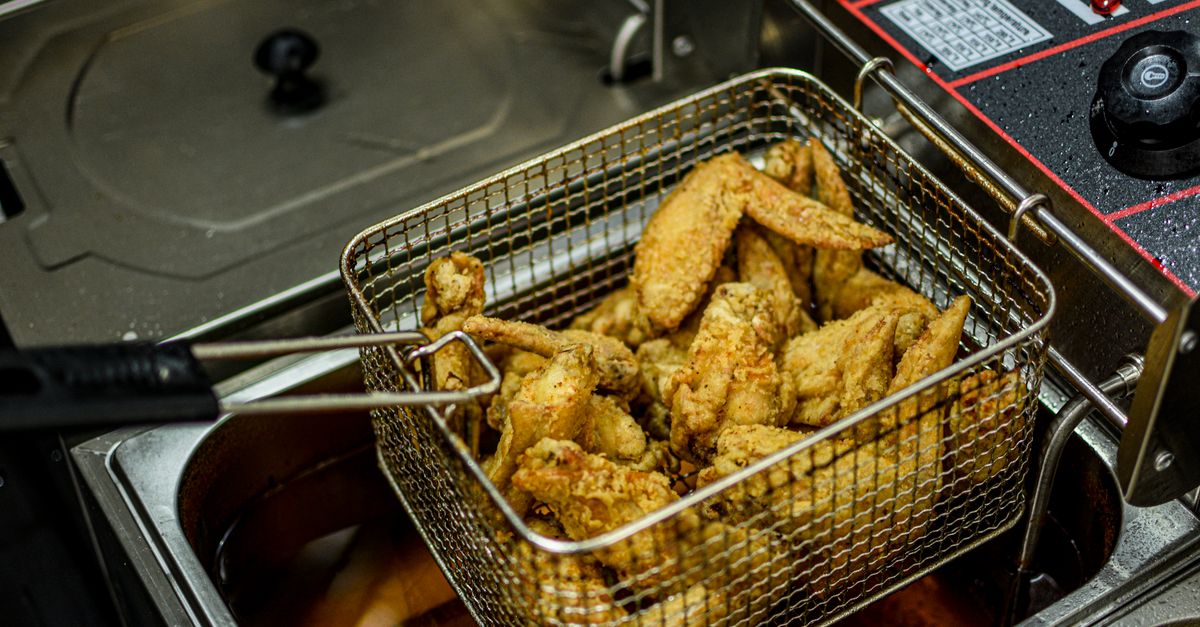
If you already own an Instant Pot and trust the brand, the Vortex extends that ecosystem into air frying. The appeal is multi-function: air fry, pressure cook, slow cook, all in one unit. The reality is that air-fry performance lags dedicated models — slower preheat, slower cooking, and temperature consistency that’s adequate but unremarkable.
I’d recommend this only if you’re replacing an existing Instant Pot or buying your first one and want air frying as a bonus feature. If air frying is your primary reason to buy, the Ninja or Cosori will serve you better. Durability is the other concern: Instant Pot’s defect rate in the first year runs higher than Ninja or Cosori, and while support is responsive, early-failure complaints aren’t rare.
Strengths:
- Multi-function design (pressure cook, slow cook, air fry) consolidates appliances
- Familiar Instant Pot interface for existing users
- 6-quart capacity is adequate for families of 4–5
Weaknesses:
- Air-fry performance lags dedicated air fryers (slower preheat, slower cooking)
- Higher reported defect rate in first year compared to Ninja or Cosori
- Temperature consistency is only adequate
Best for: Existing Instant Pot owners who use pressure-cook or slow-cook weekly and want to add air frying without buying a separate appliance. If you don’t already own an Instant Pot and air frying is your main goal, choose something else.
If you’re weighing the Vortex against the Ninja Foodi specifically, see our head-to-head breakdown at Instant Pot vs Ninja Foodi: Which Multi-Cooker Is Right for You?.
Philips Airfryer Essential — best for singles or couples in small spaces
Philips invented the air fryer, and the Essential is their streamlined version: smallest basket (2.6 qt), smallest footprint, quietest operation, and premium build quality. This is deliberately designed for one or two people. If you’re cooking for a family, you’ll batch every single meal — it’s not worth the frustration or the price premium.
But for singles or couples in apartments or small kitchens, the Essential is excellent. It’s fast despite the small size, quiet enough that you can run it while on a call, and built to last many years based on long-term user reports. The non-removable interior means you’re wiping it down after each use instead of tossing a basket in the dishwasher, which is fine for two people but annoying at scale.
Philips models also tend to draw less power than some competitors — a consideration if you’re running the appliance daily in a small apartment where every watt shows up on the electricity bill.
Strengths:
- Smallest footprint (10” × 9” × 10”) fits tight countertops
- Quietest operation among basket-style air fryers
- Premium build quality and durability with multi-year lifespans commonly reported
- Lower energy consumption than many competitors
Weaknesses:
- Tiny 2.6-quart basket requires frequent batching for families
- Price-per-capacity is worst here — expensive for what you get
- Non-removable interior requires hand-wiping instead of dishwasher cleanup
Best for: Singles or couples in small spaces who don’t cook for crowds and value quiet, compact, well-engineered appliances. If your household is four or more people, the batching burden and price premium aren’t justified.
Breville Smart Oven Air — best for families replacing a toaster oven
The Breville isn’t an air fryer in the basket sense — it’s a premium countertop convection oven with air-fry capability. The design philosophy is “replace your toaster oven and get air frying as a bonus,” which means it has the largest effective capacity here (4.5 qt air-fry mode, larger for standard oven use), the quietest operation, and the most premium build.
My partner and I considered this when we renovated our kitchen the second time, but our counter space couldn’t justify it. The footprint is massive (15” × 16” × 9”) — this is a permanent real-estate commitment. If you’re already planning to replace or upgrade your toaster oven, the Breville makes sense. If you just want an air fryer and have a working toaster oven, it’s overkill and expensive.
Strengths:
- Largest capacity and most versatile (air fry, bake, toast, roast)
- Quietest operation among all models here
- Premium build quality with responsive white-glove customer support
Weaknesses:
- Massive countertop footprint requires permanent space commitment
- Slowest preheat time
- Highest price ($400–$480) is overkill if air frying is your only function
Best for: Families of 4–6+ who are already shopping for a premium countertop oven and want air-frying capability included. Only buy this if you’re replacing an existing appliance — don’t add it just for air frying.
Side-by-side: Capacity and family workflow

Basket size changes your weeknight workflow more than any other spec. Here’s what capacity actually means in practice:
2.6 qt (Philips): One chicken breast, enough fries for two people, or reheating leftovers for one. Singles or couples only.
5.8–6 qt (Cosori, Instant Pot): Two chicken breasts, fries for 3–4 people, or a small whole chicken. Families of 4–5 eat together in one batch. Families of six or more batch twice.
8 qt (Ninja): Four chicken breasts, fries for 5–6 people, or a full rotisserie chicken. Best air fryer for large family cooking — most households batch once or not at all.
4.5 qt oven-style (Breville): Misleading comparison because it’s oven capacity, not basket. Can handle multiple trays, whole chickens, casseroles. Largest effective capacity, but requires different workflow (oven thinking, not basket thinking).
If you have six or more people and cook together most nights, the Ninja is the only basket model that keeps up without constant batching. The Breville handles it differently (oven-style), but the price and footprint are barriers.
What independent testing reveals about cooking performance
America’s Test Kitchen and Good Housekeeping Institute both run side-by-side air fryer tests using the foods people actually buy these appliances for: frozen french fries, chicken wings, reheated pizza, and Brussels sprouts. Their findings consistently show that the differences between mid-range and premium models show up most in temperature stability and evenness of browning.
Budget models can produce crispy wings and golden fries — but they’re more likely to have hot spots that burn edges while leaving centers undercooked. Premium models like the Breville and Philips deliver more even results across the basket. For most home cooks, the mid-range models (Ninja, Cosori) hit the sweet spot: consistent enough for everyday cooking without paying for precision you won’t notice outside of delicate pastries.
The other performance factor that matters is durability under real use. Consumer Reports stress-tests appliances through hundreds of cook cycles and tracks long-term reliability through member surveys. Their ratings consistently rank Cosori and Philips higher for durability, while noting that budget Ninja models show more wear and component failures after heavy use. The warranty length reflects this: Cosori’s 2-year coverage versus Ninja’s standard 1-year suggests the manufacturers know which units are built to last.
Side-by-side: Air fryer vs convection oven — do you need both?
The most common question I hear: “I already have a convection oven — do I really need an air fryer?”
Air fryer wins on:
- Speed: Much shorter preheat compared to a full oven. Frozen fries cook faster. Real time savings on weeknights.
- Energy cost: Uses substantially less energy than a full oven because you’re heating a smaller space. If you air-fry regularly, the savings show up on your electricity bill over time.
- Cleanup: Dishwasher-safe baskets (Ninja, Cosori, Instant Pot) beat scrubbing baking sheets.
- Crispy results: Rapid air circulation beats standard convection on wings, reheated leftovers, thin pastries.
Convection oven wins on:
- Capacity for volume: Whole chicken plus vegetables on two trays. Air fryer requires batching or staging.
- Baking: Air fryers struggle with traditional baking (bread, cakes, cookies). Oven is built for it.
- Large casseroles and sheet pans: Already own the oven, no additional countertop space required.
My recommendation: Most families end up with both. Use the air fryer for weeknight speed (fries, rotisserie chicken, reheating). Use the oven for Sunday roasts, casseroles, and baking. If you only cook for 1–2 people and already have a convection oven, you can probably skip the air fryer unless speed and energy savings matter to you.
How we compared these
We pulled data from owner manuals, independent testing from America’s Test Kitchen and Good Housekeeping Institute, and long-term user reviews (multiple years of ownership) from Amazon, Costco, and Reddit’s r/airfryers community. Performance and reliability assessments come from aggregated owner reports and published testing results from Consumer Reports.
We didn’t test every model in our own kitchen — we’re transparent about that. What we did is synthesize what real users report after extended ownership, which matters more than launch-day performance. Durability signals come from warranty coverage, support responsiveness, and failure patterns that show up after the return window closes.
Pricing verified August 7, 2026 across Amazon, Target, Williams-Sonoma, Best Buy, and manufacturer sites.
FAQ
Which air fryer brand is most reliable long-term?
Cosori has a strong reliability track record among mid-range options, with users commonly reporting multi-year lifespans and rare basket warping. Philips and Breville are more reliable still, but you’re paying a premium for that durability. Ninja’s budget models show higher failure rates after a couple years of heavy use, though the mid-range Foodi line is more solid.
Can an air fryer replace a convection oven?
Not entirely. Air fryers excel at speed, energy efficiency, and crispy results for smaller batches. Convection ovens handle larger volumes, traditional baking, and casseroles better. Most families use both: air fryer for weeknight speed, oven for Sunday roasts and baking. If you’re cooking for 1–2 people and prioritize speed, an air fryer could replace most of your oven use.
What size air fryer do I need for a family of six?
The Ninja Foodi’s 8-quart capacity is the only basket model here that handles six or more people without constant batching. The Breville Smart Oven Air works too, but it’s oven-style and requires a large footprint. Smaller models (5.8–6 qt) will have you cooking in two batches most nights.
Are expensive air fryers worth it?
Depends on what you’re paying for. Philips and Breville cost more but deliver measurably quieter operation, better build quality, and longer lifespans compared to budget models. If you cook daily and plan to keep the appliance for many years, the premium pays off. If you cook a few times a week and replace appliances every few years anyway, Ninja or Cosori offer better value.
Do air fryers really save money on electricity?
Yes, compared to running a full-size oven. Air fryers heat a much smaller space and preheat faster, so they use less total energy per cooking session. The exact savings depend on your local electricity rates and how often you use it, but regular users will see the difference over a year of daily or near-daily cooking.
Affiliate disclosure: We earn commissions from qualifying purchases made through links in this article. These commissions don’t affect our recommendations — we only link to products we’d suggest regardless.
For most families cooking regularly, the Ninja Foodi offers the best balance of capacity, speed, and price. If you want tighter temperature control and better long-term reliability, the Cosori Pro III is worth the small price jump and comes with a 2-year warranty that reflects the brand’s confidence. And if you’re shopping for one or two people in a small space, the Philips Essential is beautifully engineered — just don’t try to cook for a crowd with it.